‘Pure’ defined contribution (DC) is not the “last word” in pension provision, despite collective DC being “incredibly difficult to get going”, Resolution Foundation president, Lord David Willets, has claimed.
He added that “neither the public sector pension expense nor pure DC are currently sustainable”.
Speaking at a recent Hymans Robertson conference, Willets stated that the shift from defined benefit (DB) to DC was a “classic example of breaking the intergenerational contract”.
“What we've done is over 20 years in parliament is make the DB pension promise better and better for us, more and more cast iron, with more and more price protection, more and more rights for our surviving spouses, more and more rights for early leavers. We made it so generous that we turned it into a once-off special offer for our generation, never to be repeated,” he said.
“Now for the younger generation, we have DC, and we never are going to go back to the kind of DB pension we had before. But that has involved a massive shift of risk onto individuals. I do think [we need to find] some ways of sharing risk in DC provision. I know getting collective DC going is incredibly tricky, but I don't think pure DC is the last word in pension provision."
However, Willets highlighted auto-enrolment (AE) as a “fantastic success” for getting younger generations engaged in “structured savings”.
"Despite its issues, such as “not enough money going in”, the AE framework can be used for wider public policy objectives to “provide a bit more flexibility”, such as incorporating “a rainy-day savings fund of up to £1,000”, he suggested.
In contrast, Willets advocated for more ‘inflexibility’ with accessing private pension pots, highlighting that “the capacity to take out a private pension pot significantly earlier [in age] than the state pension age does seem to result in a significant cohort people to withdraw from the labour market”.
“The age at which you can access your private pension saving is too young, and people should be in the mentality that they keep on working and cannot access that pot until they're getting much closer to what we have as state pension age,” he added.
The “cost and viability” of the state pension system is a “massive challenge”, Willets warned, explaining that the triple lock is far more expensive than was first forecast, “and something does have to be done about it”.
“In my ideal world, political parties would have the courage to get rid of the triple lock for the future,” Willets said.
“If they don't do that, then the other way of helping to finance it is by speeding up the increases in the state pension age.
“Although initially we thought that state pension age is simply determined by some ratio to life expectancy, it does seem to me, like every other area of public policy, you can look at its fiscal implications and the extent to which there is the capacity to afford the rapidly rising state pension expenditure.
“So, I think that debate won't go away. In fact, it's intensifying,” he added.
Willets also highlighted the need for “a solution” to the challenge of funding social care, as “social care anxiety is at least as big as many people's pension anxiety”.



Latest News
-
PM confirms triple lock will become ‘annual double lock’ after next general election
-
UK venture capital reaches parity with US as pension investment opportunity grows
-
Value protected annuity sales rise 'significantly' in 2025/26
-
Bulk annuity market reaches £10.2bn in H1 as small scheme deals thrive
-
Three quarters of professionals expect members to get a share of DB surplus
-
More than a third cut pension contributions after major life events



Supporting retirement decisions
Laura Blows discusses retirement saving levels in the UK, and the support required for members, trustees and employers, with WEALTH at Work director, Jonathan Watts-Lay
Podcast: From pension pot to flexible income for life

Podcast: Who matters most in pensions?
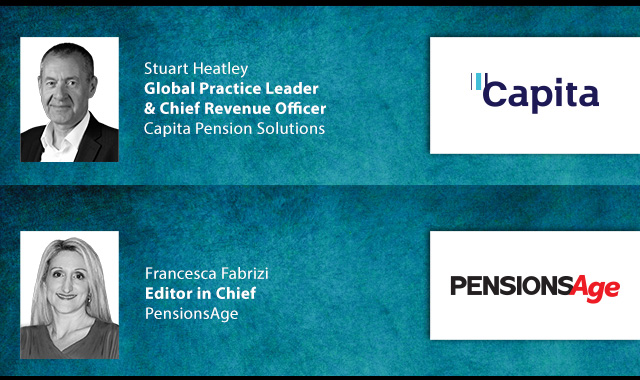
In the latest Pensions Age podcast, Francesca Fabrizi speaks to Capita Pension Solutions global practice leader & chief revenue officer, Stuart Heatley, about who matters most in pensions and how to best meet their needs







© 2019 Perspective Publishing Privacy & Cookies
Recent Stories